 If you are my agent or my editor you should stop reading. Or pour a stiff drink before continuing. Seriously.
Two days ago I was on the final, tweak-the-ending home stretch of the sequel to Swiss Vendetta. Then yesterday happened. First my husband read the draft. He was very complimentary but pointed out a few details for consideration (I have to listen to him since he’s Swiss and that’s where the books are set) and had a few questions. After these discussions my mind rolled through the solutions and I have a tendency to overcompensate. If someone says “I wonder if you should trim so-and-so’s role.” I think maybe I should cut them altogether and streamline the entire theme. You can see where this heads…. After this conversation I’m in full questioning/realigning mode.
But that’s not what really did me in. Truth be told, I can lay blame at the feet of a specific person. Christine Stewart. She is a friend and fellow writer (also a professional editor and consultant aka TheRealWriter) and is a great Beta reader for me. I’d sent her an email the evening before asking if she had a window of reading time available. I hit send and went back to work. Once my husband had my mind whirring I thought: What will Christine think about the draft? And it came to me. I knew exactly what she would say. And I started to reorganize. Mainly it’s the opening, and then how things cascade afterward, it’s not a change of story or of character or place, still….. In Olympic Games’ terms I suppose it’s like hitting your peak at training, with your bags packed for the Games, only to be told the Games have been rescheduled and are still six months out and you have to keep training at peak condition all that time. What? I was nearly finished, ready for the victory lap! Now it’s time to get back in the water and keep swimming. After all, in six months you will likely be an even better athlete…. To round out the metaphor I’m sure this will be a much better book.
Now, back in the water…..
(I also blog at MissDemeanors.com)


 In the 18th century Switzerland was one of the only republican political systems. In the American Colonies, when drafting the Constitution and Bill of Rights, the Founding Fathers, especially John Adams, James Madison and George Mason, were inspired by this social and political organization. Ironically, it was only fifty years later when, in 1848, the Swiss adopted a new Constitution. In creating it they adopted many of the American features including the two-chamber system and representative democracy.
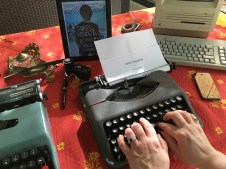 I need a tagline. Something appropriate for, let’s say, a bookmark. Put differently, I have to distill my entire book, the product of hours, days, months of work, into a few words. Not necessarily a sentence. A few words that suggest a sentence.
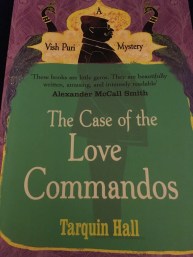 Recently I discovered the Vish Puri mysteries written by Tarquin Hall. I bought the first one at a hotel in Delhi, on the recommendation of the bookshop owner, and was immediately gratified. Hall is a Brit living in Delhi, where his hero resides, and the nuance of Indian English used by his characters is an immersion into their world. Of course, this isn’t dialect – it is the English of the country – however, it is dialogue that hints at more than the words themselves convey.
 On the other hand, there are days when you edit and see the words disappear. 32,032 is now 27,501. Yikes. I frantically do the math: How did I cut 16%? Why? A blood-letting. Now I question my judgement: maybe I didn’t need to trim that scene, cut that chapter, edit that description.
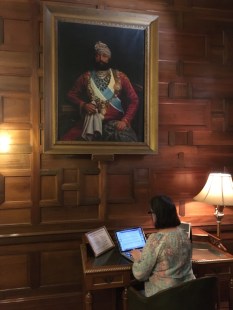 Setting the scene… in my case Switzerland. How much is too much; how much is not enough? I have several friends who don’t ever finish their great American novel, often because they keeping digging in for more detail, more perfection, just more! (Even more editing, which often means ‘less,’ then they need ‘more’ again. Argh!)


 Tracee de Hahn